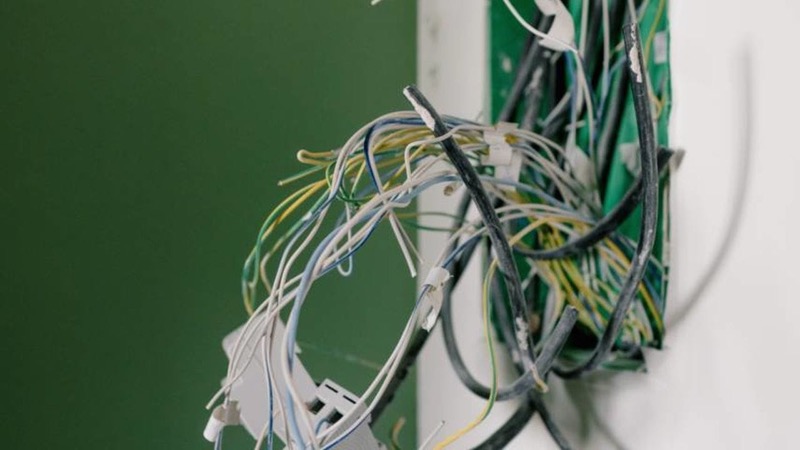

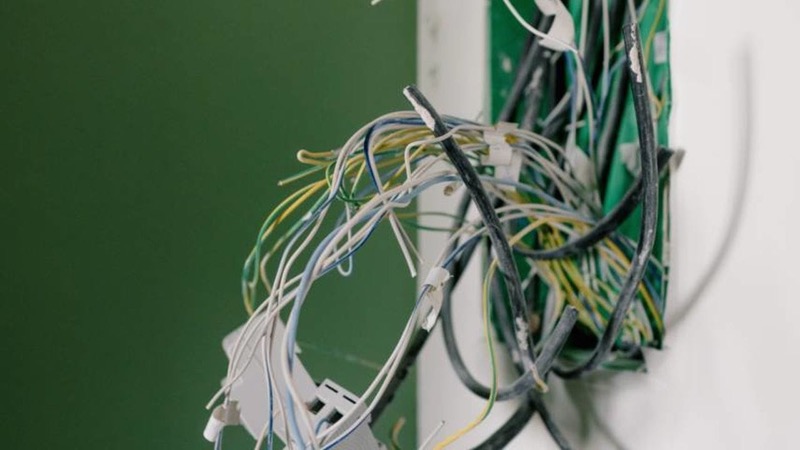
A clad facade, illegal electrical installations hidden behind a suspended ceiling, hidden slag deposits, and appliances that don't work – these are just some of the unpleasant surprises that can await a home buyer the first time they put the key in the door of their new dream home.
Once you've signed the purchase agreement, there really shouldn't be much left to do as a buyer except look forward to taking over your new home. Unfortunately, the flip side is that far too many buyers are left with a knot in their stomach and questions like "Are there unpleasant surprises after handover?", "Where do I stand as a buyer?", and "What's the best way to approach the process?"
We've put together some general guidelines to give you an overview of your legal position and which tools can genuinely help you before, during, and after the handover.
Our 3 best pieces of advice Our most important job is to make sure you and your family get through a home purchase safely. Below, we've written up three of our best pieces of advice to take with you into your home purchase. The following advice will help make sure you don't face unpleasant surprises after you have signed the purchase agreement.
Position yourself well as a buyer
From the day the property is handed over to the buyer, the seller carries a 10-year liability for the property not having hidden defects. The seller can waive this liability by using the home inspection scheme (huseftersynsordningen), which in practice shows up as the following documents:
Electrical report and condition report (el- og tilstandsrapport)
- An offer for buyer's liability insurance (ejerskifteforsikring)
- The seller's offer to pay half of the cheapest quote with basic coverage
- Information on the legal effects (stated in the purchase agreement)
Rule of thumb 1
If you choose to decline the seller's offer of buyer's liability insurance, you are, as a starting point, left alone with the risk of hidden defects. In addition, it is not possible to receive the seller's contribution toward the insurance if you have opted out of taking it out. If the seller has chosen to use this scheme, the seller is left solely with a duty of disclosure.
The seller's duty of disclosure is based on acting loyally and in good faith toward the buyer. This means, for example, that the seller is obliged to inform the buyer of defects the seller knows about, or ought to know about, in the property. However, it's important to note that in practice a distinction is made between material defects and trivial matters.
Rule of thumb 2
As a starting point, the buyer's liability insurance does not cover conditions stated in the condition report and the electrical installation report, provided the conditions were correctly stated by the experts. Nor does the insurance cover conditions disclosed by the seller – here it pays to pay particular attention to the seller's disclosure form that accompanies the condition report.
Material defects should be interpreted as deficiencies expected to influence the buyer's purchase decision. Trivial matters are considered conditions that are foreseeable, or that the buyer must accept. According to case law, the threshold for triviality varies between 2-7% of the purchase price and a minimum loss of DKK 5,000 per claim.
What if the seller doesn't offer buyer's liability insurance? Are you buying an apartment where there's no way to get clarity on its condition through a condition report and/or electrical installation report, and where you also can't take out buyer's liability insurance? Then read on.
Very few sellers choose to use the home inspection scheme when selling apartments, since it requires an inspection of the entire building and is therefore often prohibitively expensive. In such cases, the seller can instead choose to notify the buyer that they are opting out of the home inspection scheme, thereby retaining their 10-year seller liability for hidden defects. A few companies offer apartment insurance policies intended to cover illegal installations within the apartment, but it isn't a given that such a policy can be taken out.
Before you sign a purchase contract, it can be a really good idea to get an overview of the property's condition. Regardless of whether the seller has waived liability or not, it's never fun to have to confront the issue after the fact if there turn out to be significant defects. Reaching agreement with the seller can already be difficult in itself, and beyond that, the expense involved needs to be substantial before it makes sense to add legal costs on top.
Buying new-build?
For new-builds, the developer is obliged to take out building defect insurance (byggeskadeforsikring) for year-round residences. This exempts both buyer and seller from using the home inspection scheme on the first sale. The building defect insurance covers illegal building defects and similar issues for a 10-year period.
Please note: The building defect insurance does not apply when buying a holiday home, or if you yourself act as the developer during the project.
Know your home and budget for your risks
In a property transaction, it isn't just the seller and the professional parties who carry responsibility – you, as the buyer, do too. That's why it pays to uncover as much as possible as early in the process as you can. As a buyer, you also carry a responsibility to inspect the property for visible defects before the key handover. You should therefore give yourself the best possible foundation for being able to factor in any deficiencies.
Since your responsibility as a buyer relates to viewings and visits before the handover, it's essential to uncover issues as early as possible in the process. It can be difficult to reach agreement once the purchase terms (including price) have been accepted by both parties, which is why we actually recommend having the property thoroughly inspected before negotiations begin.
Rule of thumb 3
Contacting a building technical consultant can be worth its weight in gold for you as a buyer, to get an overview of the condition of your new home. A thorough building technical inspection doesn't just give you advice based on the house's current condition, but also estimates of renovation costs and input on any future home dreams and renovation wishes down the line.
The buyer should therefore always, before the transfer of risk, examine the property for deficiencies. That way, any deficiencies can be taken into account in terms of how the repairs should be covered.
Be aware that you, as the buyer, naturally need to be able to budget for the defects you've been made aware of, e.g. through the condition report, email correspondence, purchase agreement, etc. Conditions that were visible during the inspection of the property, or minor damage, are likewise conditions that a buyer must accept.
Protect yourself against unpleasant surprises after taking over the property According to the Danish National Board of Appeal (Ankestyrelsen), only 18.99% of complaints regarding buyer's liability insurance in 2020 were upheld or partially upheld.
That statistic alone is a good example of why it's incredibly relevant to think about what you can expect from your buyer's liability insurance, and to what extent you want to be covered. It's a good idea, as a buyer, to research which companies actually perform well when disaster strikes.
It really pays to help yourself by understanding how you want to insure yourself. The easiest option is to simply accept the seller's buyer's liability insurance offer, which only reflects the seller's interests, but give yourself the chance to create the best conditions for the broadest coverage possible. The insurance company states in the offer which specific conditions are NOT covered by the buyer's liability insurance. It's naturally important to pay attention to what has been specifically excluded, or whether there's a prospect of an outright rejection of the buyer's liability insurance. Classic examples are listed below:
- Building elements built by the owner (self-build)
- High purchase prices. Pay particular attention to properties with purchase prices above DKK 10,000,000.00.
- If the damage is to be expected given the age and condition of the house
- Sales that border on being for business purposes. This could, for example, be the case if the seller is a company, or if the property was recently fully renovated and sold at a much higher price shortly after.
- Issues with slag in the capillary-breaking layer
- Building elements that were not inspected during the building technical inspection, often due to restricted access.
Rule of thumb 4
Both your home insurance and buyer's liability insurance must be in effect before you get the key in hand. If you don't take out buyer's liability insurance before you gain access to the property, you cannot expect to be able to take out buyer's liability insurance for the property at any later point, since from the day of key handover you will have gained broader knowledge of the property for insurance purposes.
Do you want to prioritize broad coverage from a company at the pricier end? Or do you feel that the cost of buyer's liability insurance takes up a bigger share of your own financing than you'd like? Then it can pay to ask your financial advisor whether it's possible to have the cost co-financed through your bank loan. That way, you can secure sensible coverage for your home purchase without compromising on the other priorities in your overall budget.
Rule of thumb 5
The seller is only obliged to pay half of the cheapest quote presented for buyer's liability insurance with basic coverage over 5 years. The basic coverage covers the minimum requirements set out in the "Act on Consumer Protection in the Acquisition of Real Property" and not extended coverage. If you choose to take out a more expensive policy, you'll need to budget for covering the difference yourself.
Fill in the contact form so we can have a chat about how we can help you buy and finance your home.